Magnolia & Ink
First Day Dyslexia Activities | Dyslexia Read Aloud | It’s Called Dyslexia 6-8
First Day Dyslexia Activities | Dyslexia Read Aloud | It’s Called Dyslexia 6-8
Couldn't load pickup availability
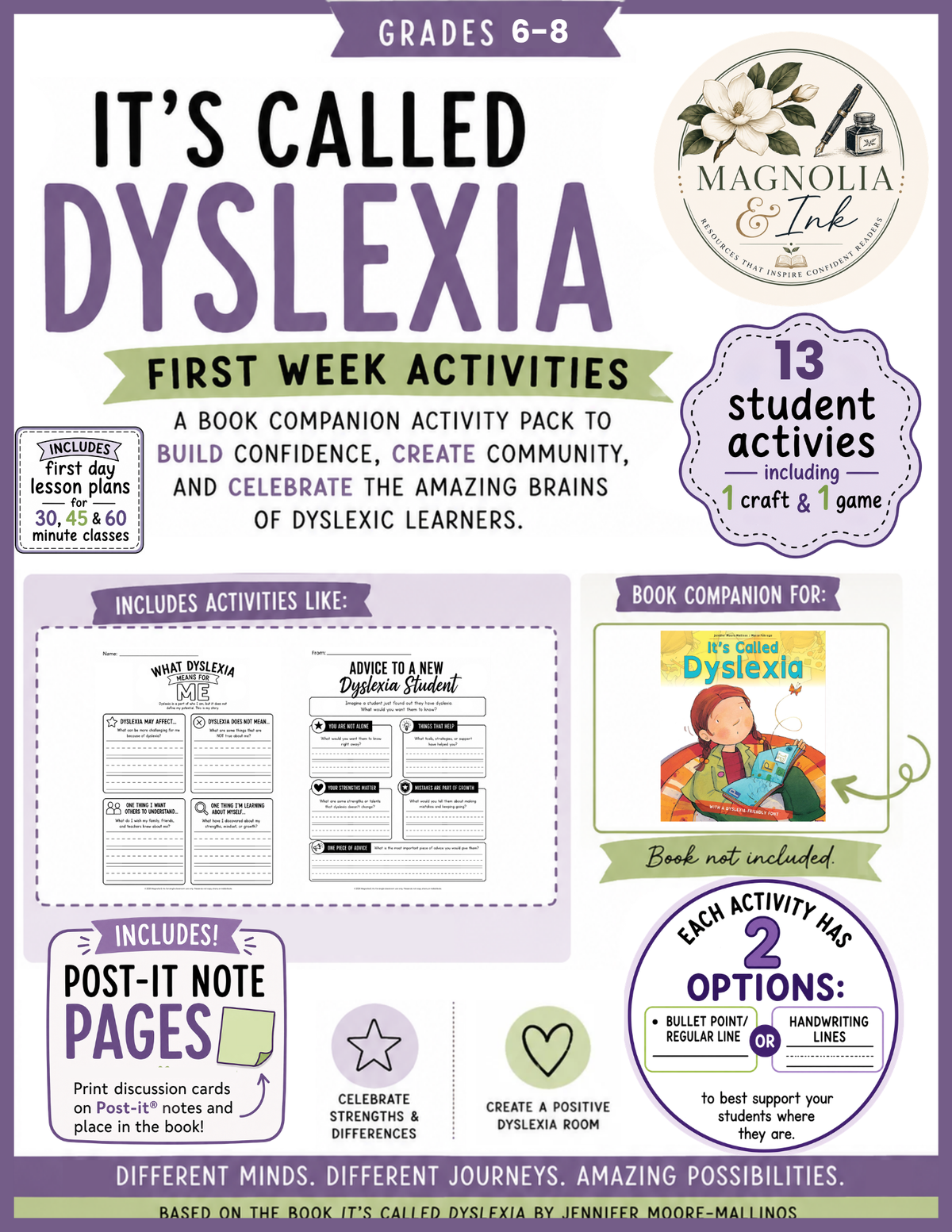
Make the first days of dyslexia instruction meaningful, age-appropriate, and empowering for your middle school students!
Starting dyslexia intervention in middle school can bring a lot of different feelings. Students may have questions about dyslexia, wonder why they learn differently, feel uncomfortable asking for help, or simply want to understand themselves better.
This Grades 6–8 dyslexia read aloud companion was designed to help students understand dyslexia while building self-awareness, confidence, self-advocacy, and a positive learner identity.
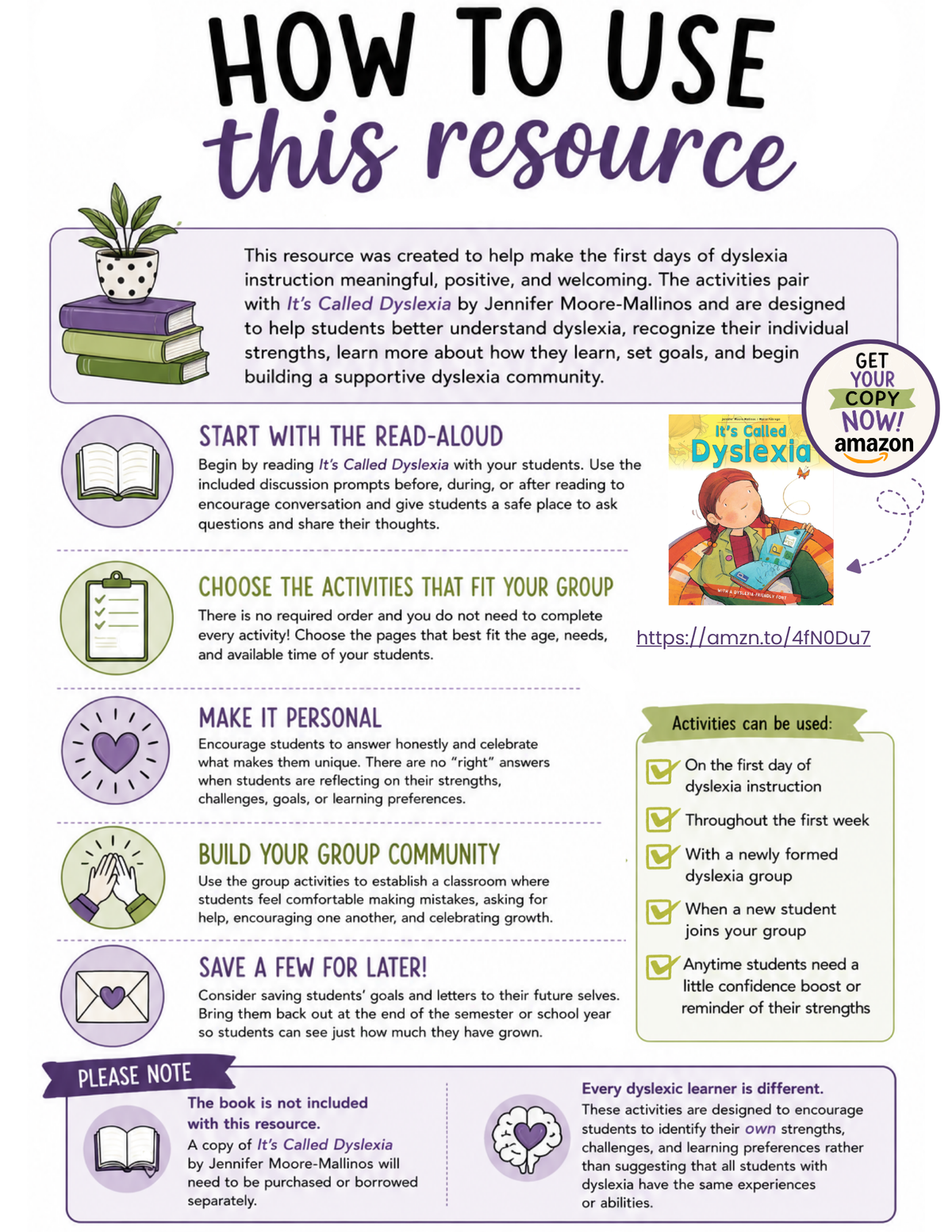
Designed to pair with It’s Called Dyslexia by Jennifer Moore-Mallinos, this resource goes beyond basic reading comprehension. Students will discuss the book, challenge common misconceptions about dyslexia, identify strategies that help them learn, practice advocating for themselves, set meaningful goals, and reflect on what dyslexia means for them personally.
PERFECT FOR THE FIRST WEEK OF DYSLEXIA!
Use the activities throughout your first few dyslexia lessons, choose the pages that best fit your students, or use individual activities throughout the year.
Activities focus on helping middle school students answer important questions such as:
What does dyslexia mean for me?
How do I learn best?
What are my strengths?
What strategies help me when something is challenging?
How can I advocate for myself?
What do I want my teachers to understand about me?
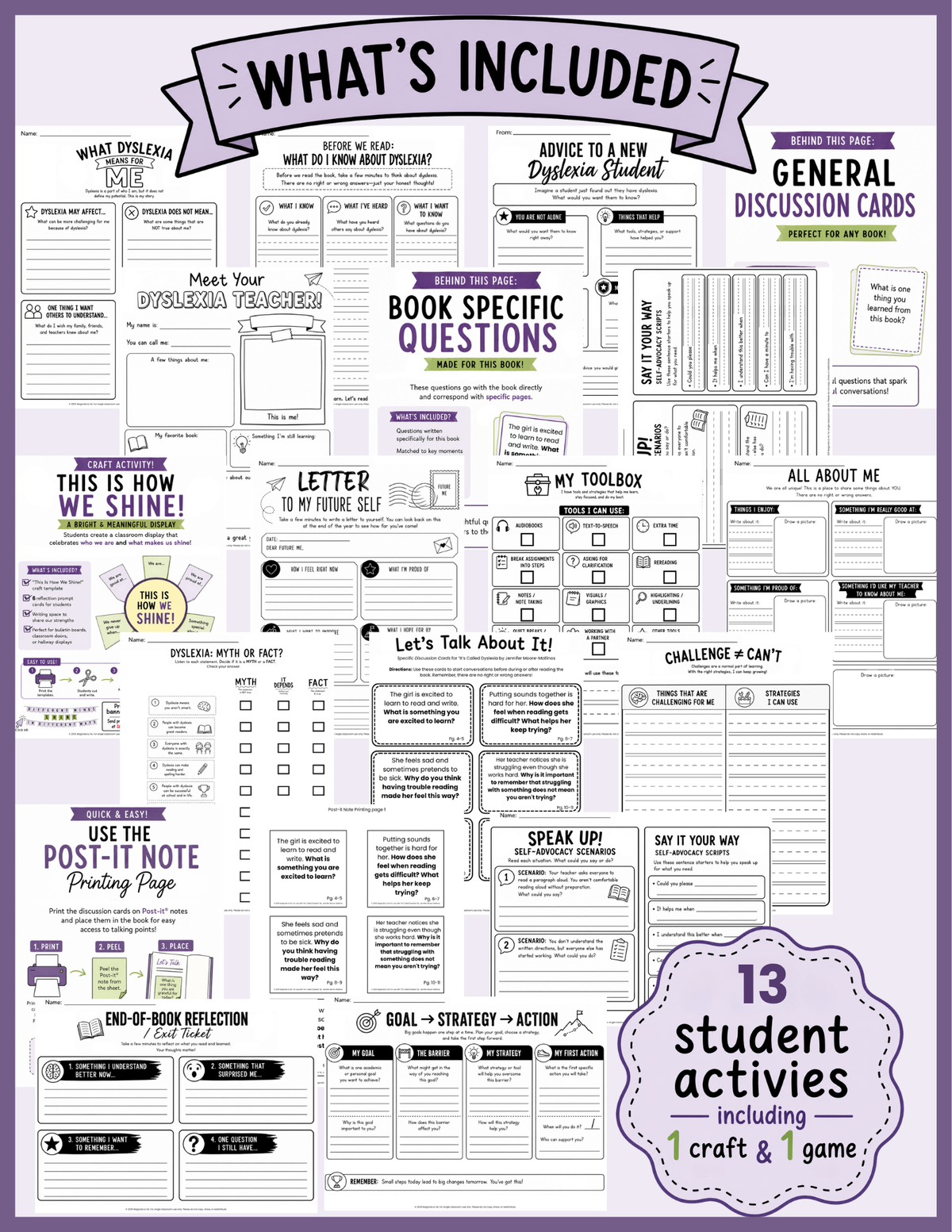
WHAT'S INCLUDED?
This middle school dyslexia resource includes activities such as:
- Before We Read: What Do I Know About Dyslexia?
- Book discussion and reflection activities
- Dyslexia: Myth, Fact, or It Depends?
- Teacher notes and answer key
- My Learner Profile
- My Strengths: Beyond School
- Challenge ≠ Can't
- What Dyslexia Means for Me
- My Toolbox — identifying helpful strategies and resources
- Speak Up! Self-Advocacy Scenarios
- Say It Your Way self-advocacy sentence starters
- Letter to My Future Self
- Goal → Strategy → Action
- Advice to a New Dyslexia Student
- End-of-book reflection/exit ticket
- And more!
BUILT-IN DIFFERENTIATION
Student needs don't suddenly disappear when they reach middle school!
Activities include two writing-format options when applicable:
• Bullet point/regular writing lines
• Handwriting lines
Choose the version that best supports each student where they are without changing the content or expectations.
MORE THAN A BOOK COMPANION
This resource isn't designed to focus only on what students with dyslexia find difficult.
Instead, students are encouraged to recognize their strengths, understand their individual learning needs, identify tools that work for them, and develop the language they need to advocate for themselves.
One of the biggest goals is helping students understand:
Dyslexia is part of who I am, but it does not define everything about me.
PERFECT FOR:
Grades 6–8, middle school dyslexia intervention, dyslexia specialists, reading interventionists, reading specialists, special education teachers, beginning-of-year activities, first-week activities, newly identified students, small groups, student self-advocacy, and learner-identity activities.
Help your middle school students start dyslexia instruction knowing more about dyslexia—and, even more importantly, knowing more about themselves as learners.
Please Note: It’s Called Dyslexia by Jennifer Moore-Mallinos is not included with this resource and must be obtained separately. This is an independently created educational companion and is not affiliated with or endorsed by the author or publisher.
Share